A contractor finds a good project. The scope looks right. The crew can handle it. The timeline works. So they start building the estimate, checking labor, materials, equipment, subcontractors, and schedule.
Then the bid goes in.
A few weeks later, the contractor gets a call: “We need your certificate before you can start.” That sounds simple enough until the insurance requirements are reviewed closely. The project requires additional insured status, waiver of subrogation, primary and non-contributory wording, higher liability limits, commercial auto, workers compensation, and maybe excess liability.
Now the contractor is scrambling. The job may still be a good opportunity, but the insurance side should have been reviewed before the bid went out. Some requirements may affect timing. Some may affect whether the certificate can be approved. Some may affect the true cost of taking the job.
That is why this construction insurance requirements checklist matters. Before you submit a proposal, you want to know what the project is asking for, what your current coverage can support, and whether anything needs to be reviewed before you commit.
Before you bid, send me your requirements—I’ll review them. That one step can help you understand the job before you are locked into it.
Contractors do not review insurance requirements because they want extra paperwork. They review them because those requirements can affect whether the job is a good fit.
The insurance section of a bid package or construction contract can tell you what limits are required, who needs to be named, what endorsements are needed, whether subcontractors must carry certain coverage, and what the certificate must show before you can start.
If you review those requirements early, you can make better decisions. You can ask questions. You can clarify wording. You can understand whether your current insurance program lines up with the job. You can also find out whether the project requires excess liability, special certificate wording, or subcontractor documentation before your bid is submitted.
The challenge is that insurance requirements are not always in one clean section. They may appear in the contract, exhibits, owner requirements, subcontractor language, indemnity sections, or certificate instructions. That is why contractors should read the full document, not just the part labeled “insurance.”
If you are not sure where to start, review this related guide on how to read construction insurance requirements before you bid. It explains how contractors can slow down, read the requirements carefully, and avoid missing important details.
The point is simple: you need to know your insurance requirements before bidding so you can understand the job, protect your profit, and avoid certificate problems later.
Use this contractor insurance checklist before you submit a bid, sign a construction contract, or promise a start date. The goal is not to turn you into an insurance expert. The goal is to help you spot the requirements that should be reviewed before they become a job delay.
General liability is usually the first coverage listed in project insurance requirements. Contractors should review the required per-occurrence limit, general aggregate limit, products-completed operations requirement, and any special language attached to the project.
A common mistake is assuming a general liability policy automatically meets every project requirement. It may not. The project may require higher limits than you currently carry. It may require completed operations wording. It may require endorsements that are not automatic. The policy may also include exclusions or conditions that need to be reviewed for the kind of work being performed.
This matters because general liability often becomes the foundation for certificate approval. If the required limits do not match your current coverage, you want to know that before you submit the bid.
You can learn more about contractor general liability on the general liability insurance page.
Additional insured requirements are common in construction contracts. The project owner, general contractor, property manager, developer, lender, or another party may require additional insured status on your general liability policy.
Before bidding, check who needs to be included, whether the requirement applies to ongoing operations, completed operations, or both, and whether a specific endorsement form is required.
One of the most common mistakes is confusing additional insured with certificate holder. A certificate holder receives proof of coverage. An additional insured may receive certain protection under the policy when the proper endorsement applies. Those are not the same thing.
If the contract requires additional insured status and the certificate does not show it correctly, the certificate may be rejected. That can delay approval and hold up the start of the job.
For a deeper explanation, review what additional insured coverage means for contractors and additional insured vs. certificate holder.
A waiver of subrogation requirement means the project may want your insurance carrier to give up certain recovery rights against another party after a covered claim. Contractors do not need to memorize the legal theory behind it. They do need to know when the contract asks for it.
Check whether the waiver is required on general liability, workers compensation, commercial auto, or another policy. Also check which parties need the waiver and whether your carrier can provide the wording.
A common mistake is only checking general liability and missing waiver requirements on workers compensation. Another mistake is waiting until the certificate is due to ask whether the waiver can be added.
You can read more here: what waiver of subrogation means for contractors.
Primary and non-contributory wording is another common construction bid insurance requirement. In plain language, the project may want your coverage to respond first and not seek contribution from another party’s insurance.
Before bidding, look for this phrase in the insurance requirements and certificate instructions. Check which policy lines need the wording and whether the carrier can issue the endorsement.
The mistake contractors make is assuming this wording is automatically included. Sometimes it is available. Sometimes it requires an endorsement. Sometimes it needs to be reviewed before the certificate can be approved.
For more detail, see primary and non-contributory explained for contractors.
Excess liability can be one of the biggest surprises in construction contract insurance requirements. A project may require $2 million, $5 million, or more in excess limits above general liability, commercial auto, and employer’s liability.
Before you bid, check whether excess liability is required, what limit is required, which underlying policies it must sit over, and whether you already carry it.
A contractor may have a solid general liability policy and still miss the excess requirement. That matters because excess liability can affect the true cost of taking the project. If you learn about it after you have already submitted your number, you may be stuck trying to absorb a cost that should have been reviewed earlier.
Review this guide on excess liability insurance for contractors if the project is asking for limits above your current coverage.
Commercial auto requirements can show up when vehicles are used for the job, even if the job itself is not focused on transportation. Contractors should review required auto liability limits, whether owned autos are covered, and whether hired and non-owned auto coverage is required.
Hired and non-owned auto can matter when employees use personal vehicles for business errands, when a contractor rents a vehicle, or when vehicles are used in connection with the project.
A common mistake is assuming personal auto coverage is enough for job-related use. Another mistake is missing additional insured or waiver wording tied to the auto requirement.
Learn more about contractor vehicle coverage on the commercial auto insurance page.
Workers compensation requirements should be reviewed carefully before bidding. The project may require workers compensation, employer’s liability limits, waiver of subrogation, or proof that subcontractors carry their own coverage.
The mistake contractors make is assuming this requirement does not apply because they have a small crew, use subcontractors, or do not think of themselves as having a large payroll. The contract may still require proof of coverage before the job starts.
Workers compensation also connects directly to subcontractor handling. If a subcontractor’s worker gets hurt and the subcontractor does not have proper coverage, that problem may come back to the general contractor in ways that should have been avoided upfront.
For more information, visit the workers compensation insurance page.
Subcontractor insurance requirements deserve serious attention. This is one of the areas where contractors often get casual, and casual handling can create real problems.
If you are the general contractor or prime contractor, you may be required to collect certificates from every subcontractor before they start work. Those certificates may need to show general liability, workers compensation, commercial auto, excess liability, additional insured wording, waiver of subrogation, or specific limits.
A good subcontractor process has three parts:
Common mistakes include letting subs start without certificates, only collecting general liability, ignoring workers compensation, failing to track renewal dates, and assuming a W-9 is enough. It is not enough.
Review the using subcontractors page and the subcontractors liability page if you use subs on your jobs.
A certificate of insurance is often the document that gets reviewed before you can step onto a job site. But a certificate is only useful when it matches what the project is asking for.
Before bidding, check who must be listed as certificate holder, whether the project name or job number must appear, whether special wording is required, and whether the certificate must show additional insured, waiver of subrogation, primary and non-contributory wording, or excess limits.
The most common certificate mistakes are sending a generic certificate, listing the wrong certificate holder, missing required wording, confusing certificate holder with additional insured, or waiting until the day before the project starts.
If you need help with certificates, start with the contractor certificate pillar article: contractor certificate insurance help. You can also review why contractors get rejected over insurance requirements.
The last item on the checklist may be the most important: read the actual contract language. Do not only review the certificate instructions. Insurance obligations may be found throughout the contract.
Look for insurance requirements in exhibits, attachments, owner requirements, subcontractor sections, indemnity language, and project-specific instructions. Sometimes the same requirement is discussed in more than one place.
A common mistake is reading the scope of work and skipping the back end of the document. That is where many of the insurance obligations live. If you sign first and review later, you may have less room to ask questions or clarify requirements.
If the contract includes requirements you do not understand, send them over before you bid. It is much easier to review them upfront than to solve a certificate problem after the job is ready to start.
Construction insurance requirements vary by project, owner, contract, job type, and location. Contractors in Texas and California may see different expectations depending on who is hiring them, what kind of work is being performed, and how the contract is written.
The safest approach is to review each project on its own. Do not assume the requirements from one job will match the next.
Texas contractors often move fast. In areas like Dallas, Houston, Austin, and other growing Texas markets, a contractor may be bidding one job, lining up the next one, and trying to get certificates issued quickly so work can begin.
That speed makes the review even more important. A commercial project in Dallas may require higher liability limits. A job in Houston may involve commercial auto or subcontractor requirements. A project in Austin may require specific certificate wording before the contractor is approved.
Before bidding a Texas project, send the requirements over. We can help you review the coverage, wording, certificate instructions, and any requirements that may affect your decision.
California contractors may run into detailed contract language, certificate requirements, workers compensation requirements, and subcontractor documentation expectations. This can show up on private projects, commercial jobs, public-related work, and larger owner-controlled projects.
Contractors in Sacramento, Northern California, Humboldt County, and other California markets should not assume a standard certificate will satisfy every job. The project may require specific additional insured wording, waiver of subrogation, primary and non-contributory language, or proof that subcontractors carry their own coverage.
California contractor insurance requirements should be reviewed carefully before bidding so you understand what the job is asking for before you commit.
A general contractor in Texas was getting ready to bid a commercial remodel. The scope looked good. The schedule worked. The contractor had the crew and subcontractors lined up.
Before submitting the bid, the contractor sent over the project insurance requirements. The review found several important items: the owner required additional insured status, waiver of subrogation, primary and non-contributory wording, and $2 million in excess liability. The contract also required subcontractor certificates before any sub started work.
Because the requirements were reviewed before the bid went out, the contractor knew what needed attention. They could factor the insurance requirements into the job decision, avoid a last-minute certificate issue, and get ahead of the subcontractor paperwork.
That is the point of reviewing requirements early. It is not just about insurance paperwork. It is about understanding the job before you bid it.
Here is the quick checklist contractors can use before submitting a proposal:
I.C. Insurance Solutions works with contractors who need more than a quick certificate. We help contractors understand what a project is asking for before they bid, before they sign, and before they are under pressure to start.
That includes reviewing job requirements, certificate instructions, contract insurance language, additional insured wording, waiver requirements, primary and non-contributory wording, excess liability requirements, commercial auto, workers compensation, and subcontractor insurance requirements.
We also help contractors think through project-related coverage needs such as builders risk insurance when that coverage becomes part of the project conversation.
The difference is personal service. You can call. You can text. You can send the documents over and have a real person review them with you. That matters when a project is moving fast and you need practical answers.
You do not have to figure out the insurance requirements by yourself. Send them over. We will review them with you and help you understand what the job is asking for.
Before you submit a bid, send the insurance requirements over. We will review them with you, explain what the project is asking for, and help you understand whether your current coverage lines up with the job.
👉 Send me your requirements—I’ll review them.
👉 Call or text me anytime.
You can reach out through the contact page or send your project requirements directly for review.
A construction insurance requirements checklist is a practical list contractors use to review required coverage, limits, endorsements, certificate wording, subcontractor requirements, and contract insurance language before bidding or starting a project.
Contractors should review insurance requirements before bidding because the requirements may affect job cost, certificate approval, start date, and whether the contractor can meet the project obligations.
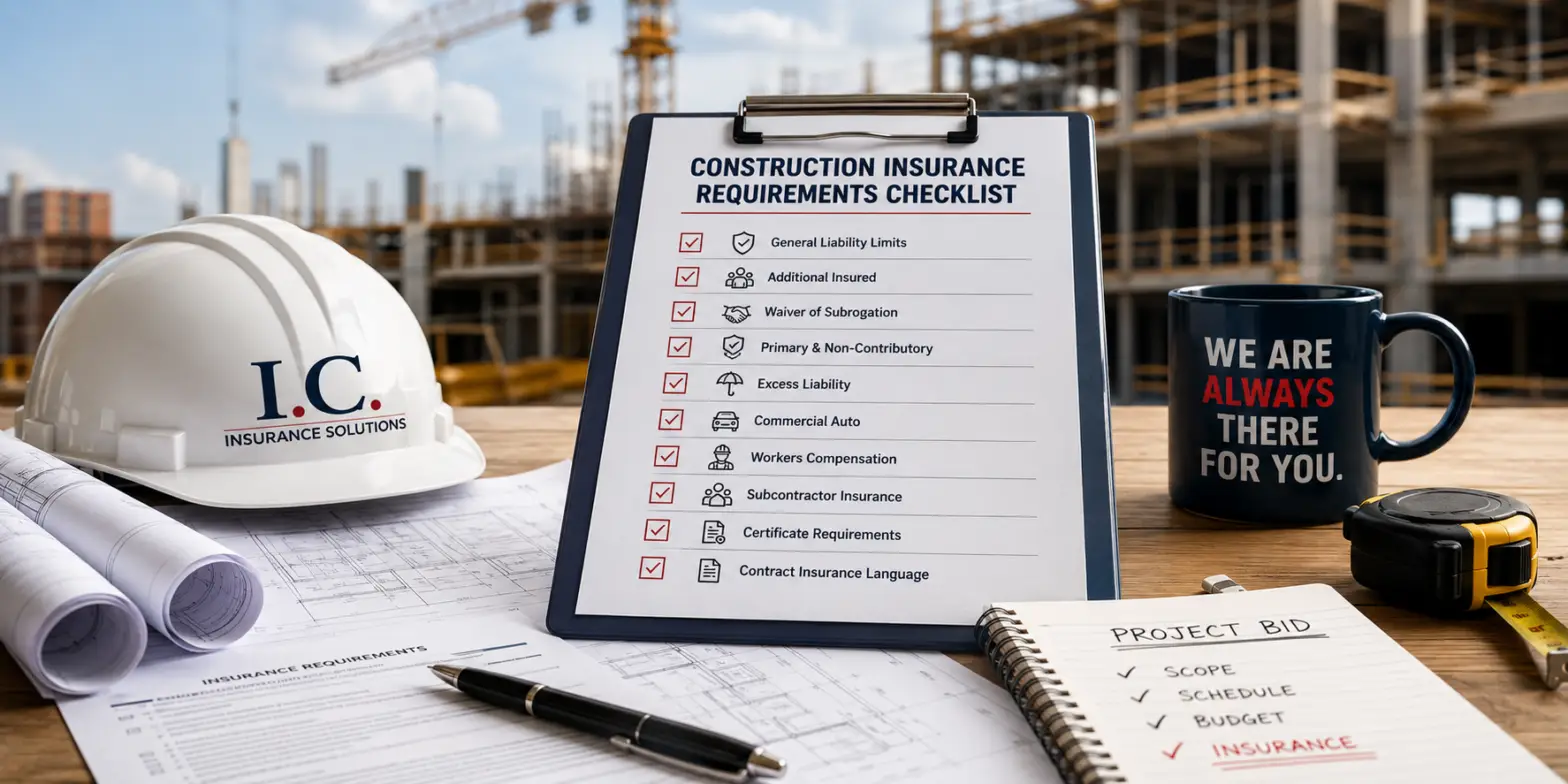
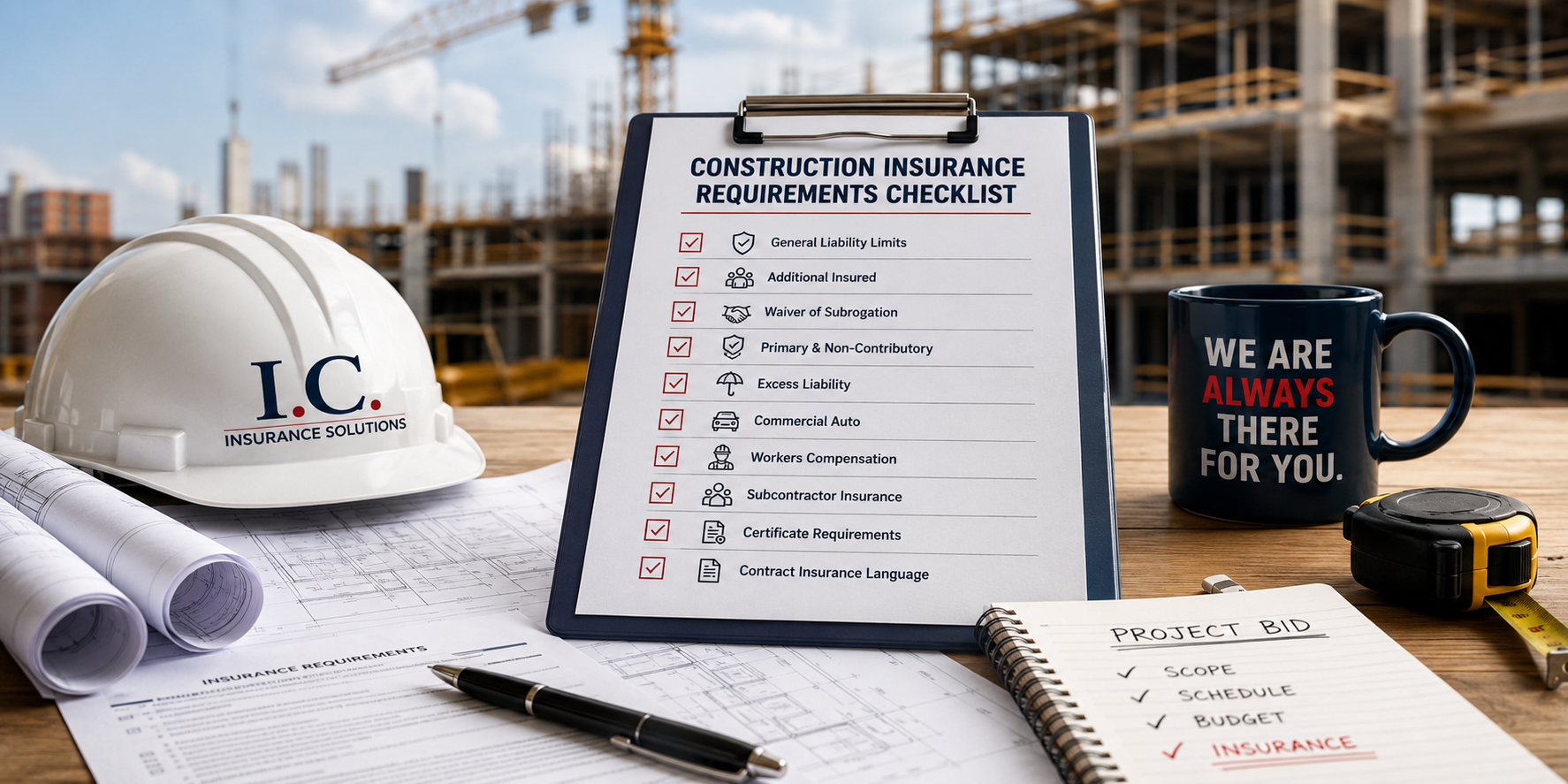
Common construction contract insurance requirements include general liability, additional insured status, waiver of subrogation, primary and non-contributory wording, excess liability, commercial auto, workers compensation, subcontractor insurance, and certificate requirements.
Contractors should check the certificate holder, project name, required wording, policy limits, additional insured language, waiver of subrogation, primary and non-contributory wording, excess liability requirements, and delivery deadline.
An additional insured requirement means another party, such as a project owner or general contractor, may need to be added to the contractor’s policy by endorsement for the project. It is different from simply being listed as certificate holder.
Yes, general contractors should collect and track subcontractor insurance before work starts. Depending on the job, this may include general liability, workers compensation, commercial auto, and excess liability.
Texas and California contractor insurance requirements can vary by project, owner, city, contract, and type of work. Contractors in both states should review each set of project insurance requirements before bidding.
If a contractor misses an insurance requirement, the certificate may be rejected, the job may be delayed, additional coverage may be needed, or the contractor may lose part of the expected profit because the requirement was not reviewed before bidding.
Sometimes insurance requirements can be clarified before the bid is submitted or before the contract is signed. It is much easier to ask questions early than to address problems after the job has already been awarded.
I.C. Insurance Solutions reviews construction insurance requirements for contractors in Texas and California. Send me your requirements—I’ll review them before you bid.