A project owner asks to be listed on your certificate. You send it over. Then they come back and say, “We need to be additional insured.”
That is where a lot of contractors get stuck. A certificate holder and an additional insured are not the same thing, and confusing the two can delay job approval.
Here is the plain-English difference contractors in Texas and California should understand before submitting a certificate.
Send Me Your Requirements—I’ll Review Them
Call or Text Rich
Key Takeaways
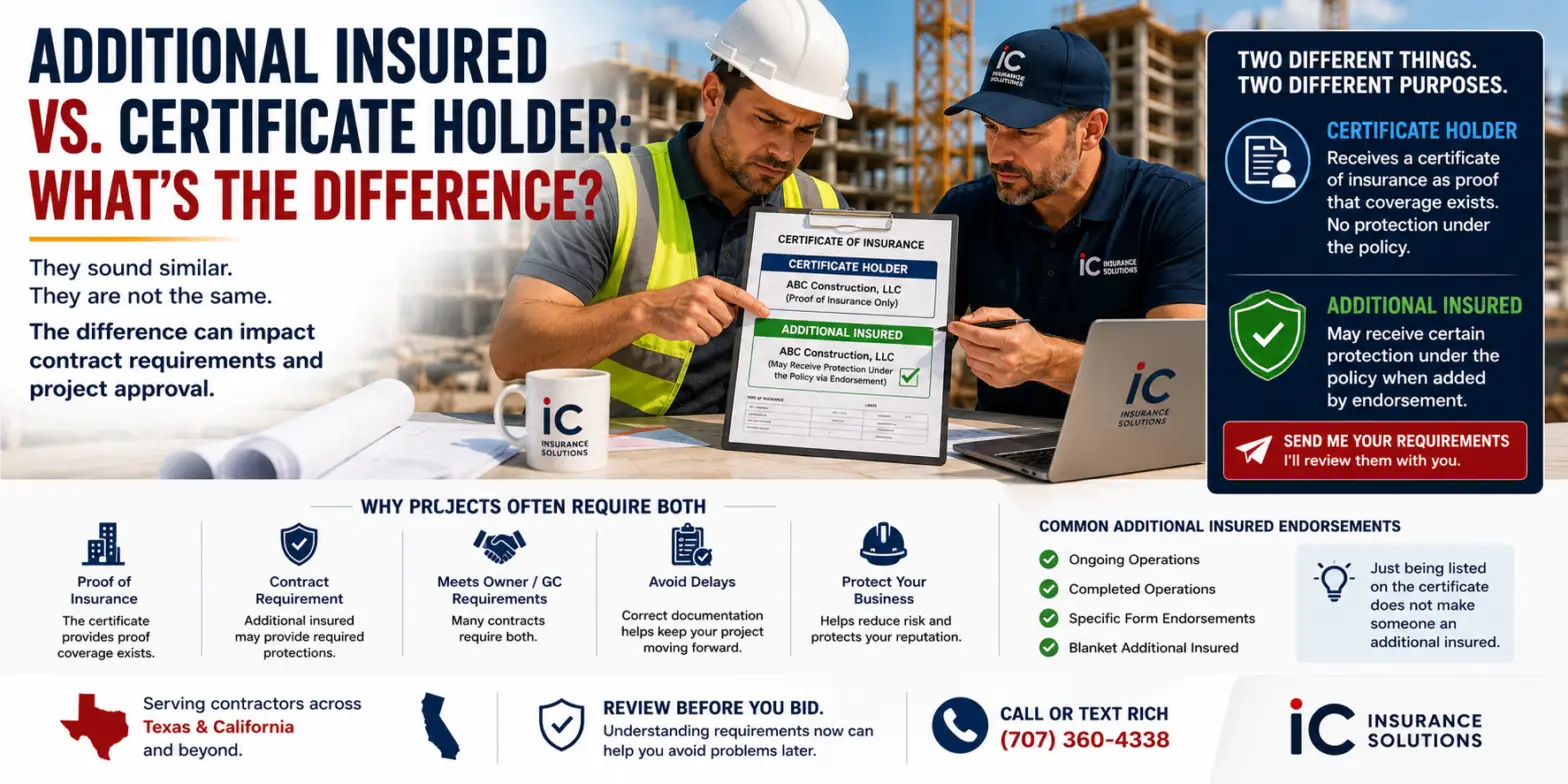
- A certificate holder receives proof that insurance exists.
- An additional insured may receive certain protection under the policy when properly added.
- Listing someone as certificate holder does not automatically make them additional insured.
- Many construction projects require both.
- Confusing these terms is a common reason certificates are rejected.
- Before submitting a certificate, send me your requirements—I’ll review them.
What Is a Certificate Holder?
A certificate holder is the person or organization receiving the certificate of insurance. The certificate shows that coverage exists, including basic details like policy types, limits, and effective dates.
Being listed as a certificate holder does not automatically provide protection under the policy. It simply means that party is receiving proof of coverage.
What Is an Additional Insured?
An additional insured is a party that may receive certain protection under your policy when properly added through the correct endorsement.
Project owners and general contractors commonly request additional insured status because they want protection tied to your work. Learn more here:
What Is Additional Insured Coverage for Contractors?
The Biggest Misunderstanding Contractors Make
Many contractors assume:
- Certificate holder equals additional insured
- Putting a name on the certificate satisfies the contract
- The certificate alone creates the required protection
That is not how it works. A party can be certificate holder only, additional insured only, or both. The contract determines what is required.
Why Projects Often Require Both
Many commercial construction projects require both a certificate of insurance and additional insured status. The certificate provides proof. The additional insured endorsement may provide certain contractual protection.
This is common on commercial jobs, public works, schools, municipal projects, industrial facilities, and subcontractor agreements.
What Happens When Contractors Confuse the Two?
The certificate may be rejected. Project approval may be delayed. The job start may get pushed back while everyone tries to fix the wording.
This is one of the common problems covered here:
Why Contractors Get Rejected Over Insurance Requirements.
How to Avoid Certificate Rejections
- Review insurance requirements before bidding.
- Confirm whether additional insured status is required.
- Verify certificate holder information.
- Check endorsement requirements.
- Review all wording before submitting the certificate.
- Ask questions before the job start date gets close.
Frequently Asked Questions
What is a certificate holder?
A certificate holder is the person or organization receiving proof that insurance exists.
What is an additional insured?
An additional insured may receive certain protection under the policy when properly added through the applicable endorsement.
Is a certificate holder the same as an additional insured?
No. A certificate holder receives proof of insurance. An additional insured may receive certain protection under the policy.
Can a company be both?
Yes. A company can be both the certificate holder and an additional insured if the contract requires it and the policy supports it.
Can a certificate be rejected if additional insured wording is missing?
Yes. If the project requires additional insured status and the certificate or endorsement does not reflect it properly, approval can be delayed or rejected.