You are reviewing job requirements and see the phrase “primary and non-contributory.”
Most contractors have seen it on certificate requests, contracts, and insurance exhibits, but many are not completely sure what it means or how it affects the job.
This guide explains primary and non-contributory wording in plain English for contractors working in Texas and California.
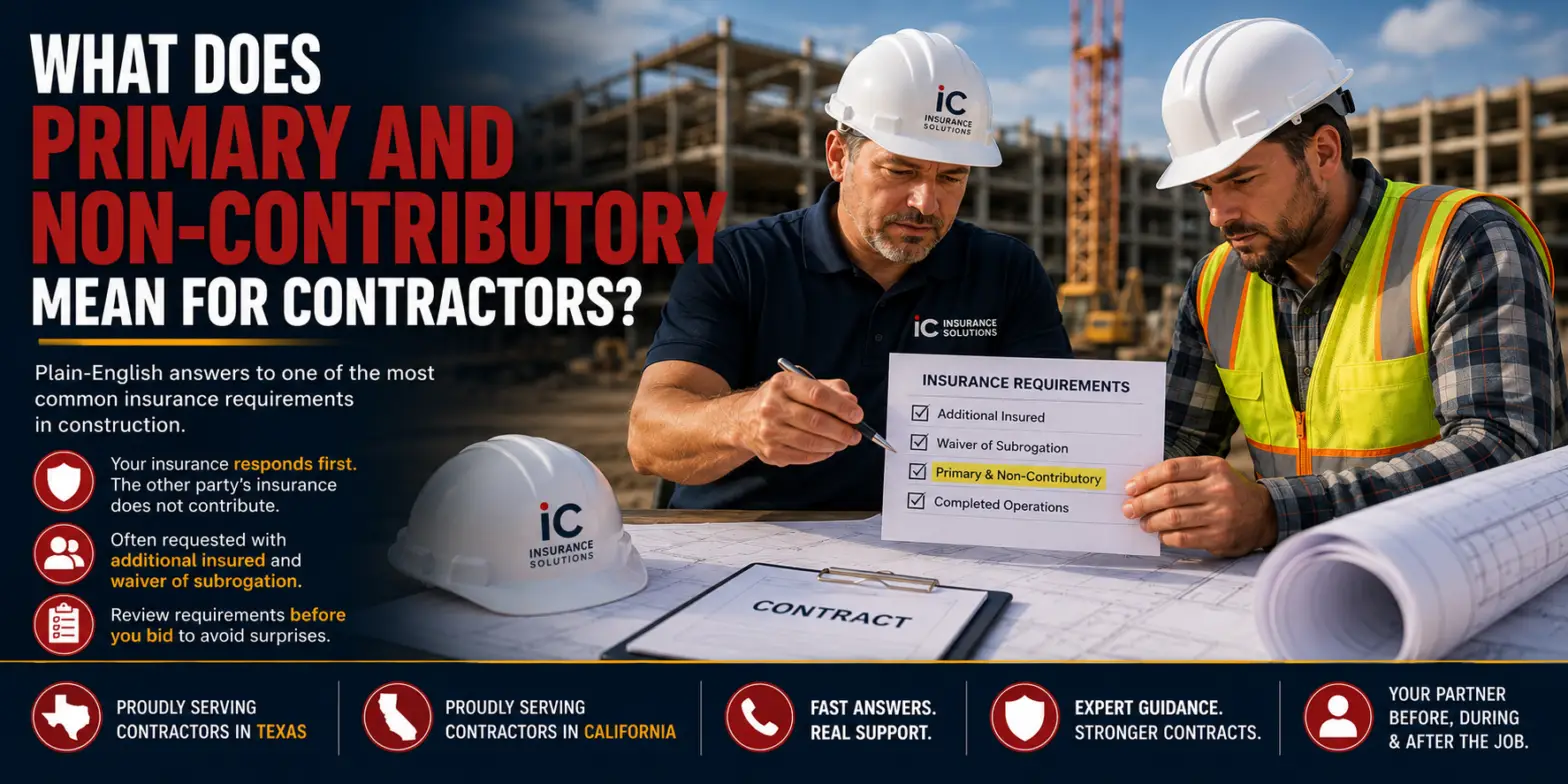
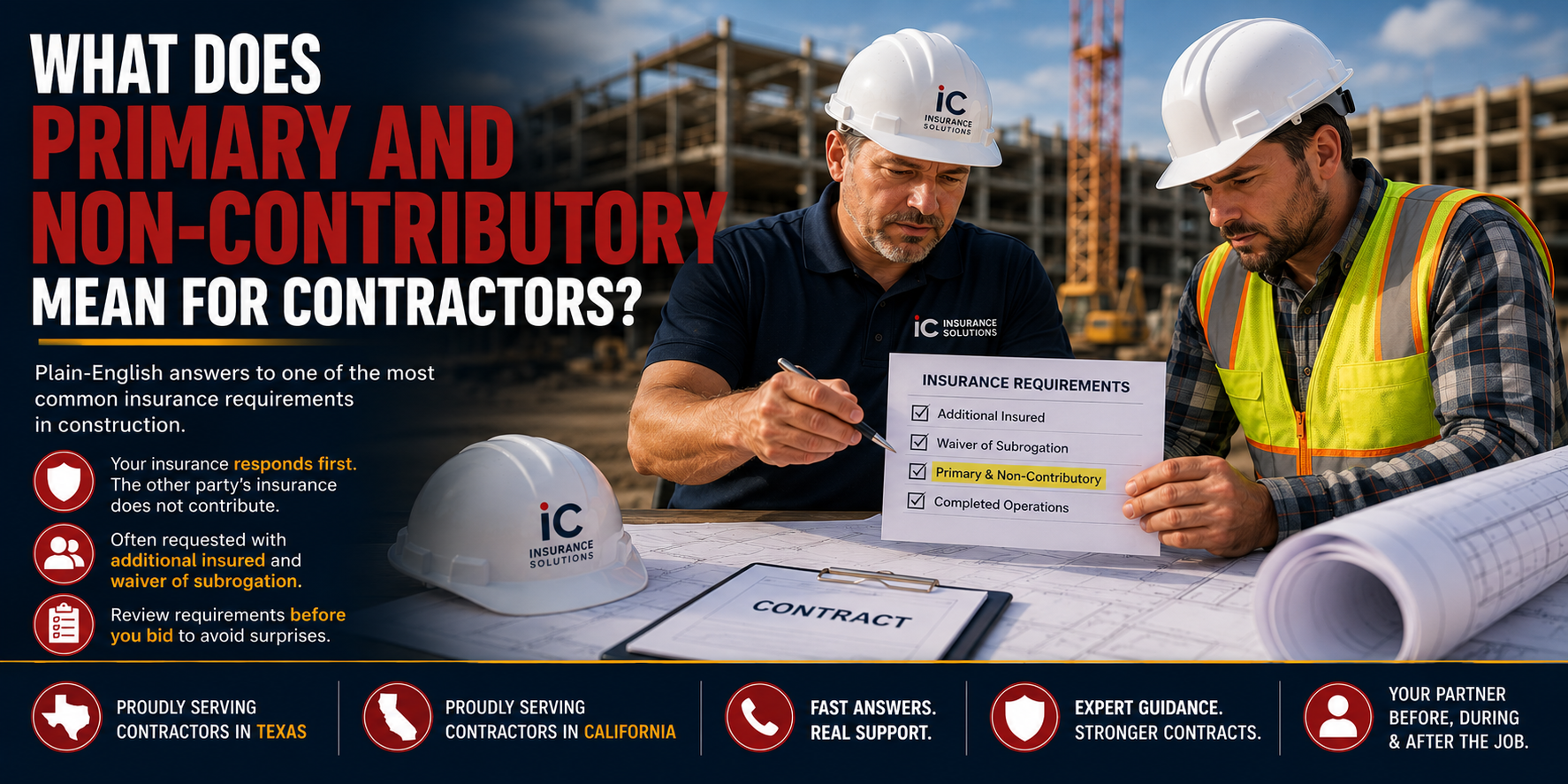
Send Me Your Requirements—I’ll Review Them Call or Text RichPrimary and non-contributory wording generally means your insurance is expected to respond first if there is a covered claim tied to your work, and the other party’s insurance is not expected to contribute before yours under the contract requirements.
In plain English: the project owner, general contractor, landlord, developer, or other party wants your coverage to be the first layer responding for certain liability connected to your work.
This wording is commonly tied to general liability coverage and additional insured endorsements.
Owners and general contractors request primary and non-contributory wording because they want clarity around how insurance is expected to respond if a claim involves your work.
You may see this requirement on:
Primary and non-contributory wording is often requested alongside additional insured status. They work together, but they do different things.
Additional insured wording may give another party certain protection under your coverage for liability connected to your work.
Primary and non-contributory wording addresses how coverage is expected to respond when multiple policies may apply. You can read more here: What Is Additional Insured Coverage for Contractors?
Contractors usually see primary and non-contributory wording when a project owner or general contractor asks for a certificate of insurance.
Certificate requests often include several requirements together:
If you have a certificate request in front of you, start here: Contractor Certificate Insurance Help.
To understand how this fits inside the full requirement sheet, review How to Read Construction Insurance Requirements Before You Bid.
Texas projects can vary widely. A smaller private job may have simpler requirements, while commercial projects in Dallas, Houston, Austin, the Permian Basin, and other active markets may require more detailed wording.
California contracts often include more formal insurance sections, more detailed certificate wording, and greater documentation expectations. Northern California contractors especially should review requirements before bidding or starting work.
Primary and non-contributory wording can affect project administration, certificate handling, underwriting review, and bid preparation. It may seem like a small phrase, but it can be part of a broader insurance burden attached to the job.
If the job also asks for higher limits, excess liability, waiver of subrogation, or subcontractor-related requirements, review the insurance section before submitting your number. For more context, read How Much Insurance Will Cost Before You Bid.
A contractor gets a project requirement sheet asking for additional insured, waiver of subrogation, and primary and non-contributory wording. At first, it looks routine.
But once reviewed closely, the requirements need to be checked against the current coverage setup before the certificate can be issued correctly. That is why reviewing requirements before bidding is better than scrambling after the job is awarded.
Send the requirements over before you bid or request the certificate. I’ll review the wording with you and explain what the job is really asking for.
Send Me Your Requirements—I’ll Review Them Call or Text RichIt generally means your insurance is expected to respond first, and the other party’s insurance is not expected to contribute before yours under the contract requirements.
No. Additional insured may provide certain protections to another party. Primary and non-contributory addresses how insurance is expected to respond when multiple policies may apply.
Owners and general contractors often request it to clarify how coverage should respond if a claim involves the contractor’s work.
It can affect administration, endorsement review, and how the job requirements are handled. The impact depends on the policy, project requirements, and coverage setup.
Yes. Reviewing primary and non-contributory wording before bidding helps contractors understand job requirements, avoid surprises, and protect profitability.