You are reviewing a contract, certificate request, or job insurance requirement and see the phrase “waiver of subrogation.”
Most contractors have seen the wording before, but many are not completely sure what it means, why it is being requested, or how it affects the job. That is exactly why it should be reviewed before you bid or start work.
This guide explains waiver of subrogation in plain English for contractors working in Texas and California.
Send Me Your Requirements—I’ll Review Them Call or Text RichWaiver of subrogation is contract wording where an insurance company gives up certain rights to seek recovery from another party after paying a claim.
In plain English, subrogation is when an insurance company pays a claim and then tries to recover money from the party that may have caused or contributed to the loss. A waiver of subrogation can limit that recovery path when the contract and policy wording support it.
Contractors usually see this wording in construction contracts, insurance requirements, certificate requests, and subcontractor agreements.
Owners and general contractors request waiver of subrogation because they want fewer disputes after a loss and a cleaner risk transfer structure inside the contract.
You may see waiver wording on:
Waiver of subrogation is not just a throwaway phrase. It may affect policy endorsements, certificate wording, contract obligations, and how the project is documented.
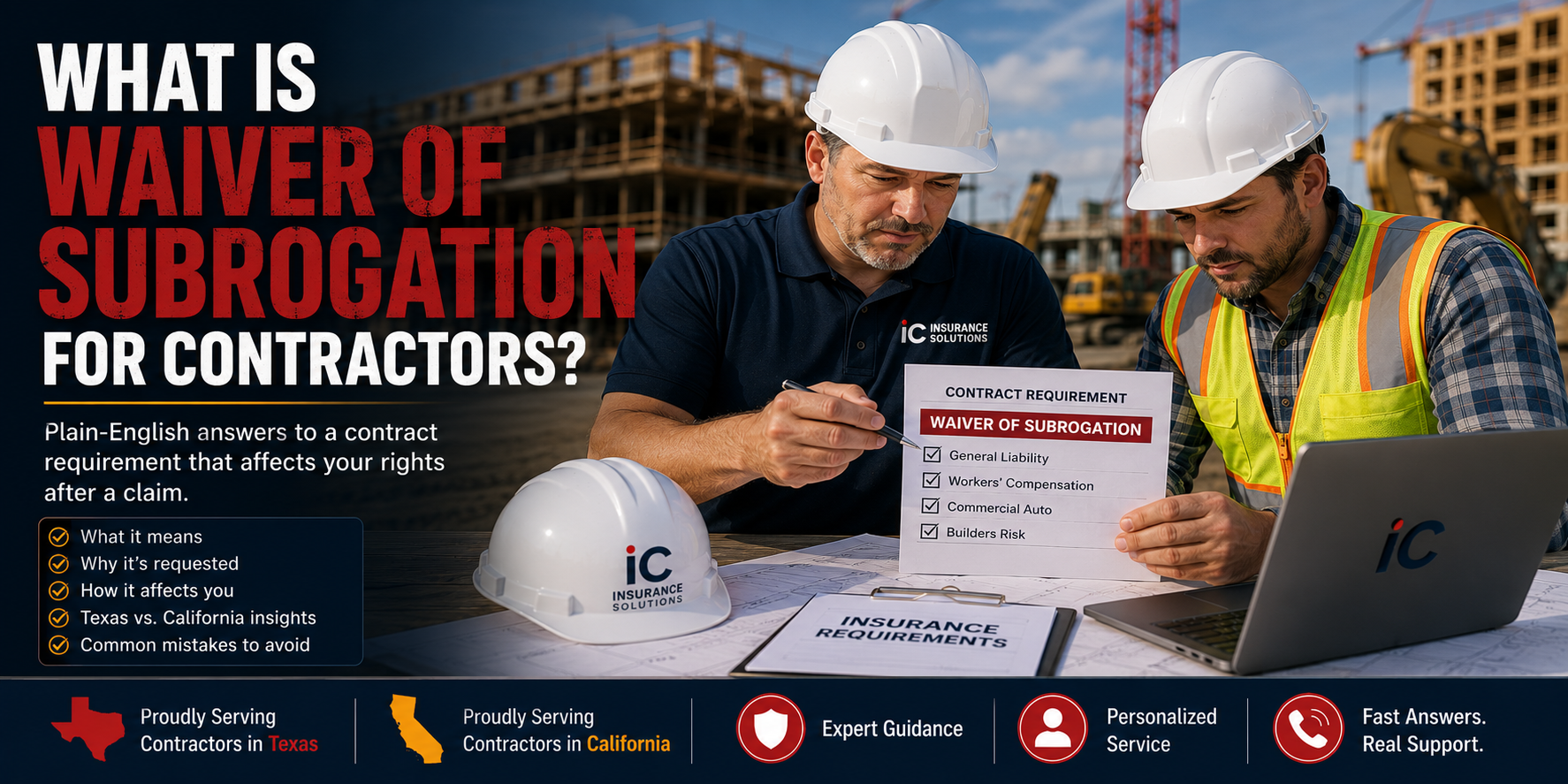
Depending on the job, waiver wording may apply to several types of coverage, including:
For related context, review the General Liability, Workers’ Compensation, Commercial Auto, and Builders Risk pages.
Additional insured and waiver of subrogation are often requested together, but they are not the same thing.
Additional insured wording may provide certain protections to another party under your policy for liability connected to your work.
Waiver of subrogation deals with recovery rights after a claim is paid. You can read more here: What Is Additional Insured Coverage for Contractors?
If the wording is unclear, send it over for review.
Texas construction requirements can vary widely. Some jobs are straightforward, while larger commercial projects in Dallas, Houston, Austin, the Permian Basin, and other active markets may ask for waiver of subrogation along with other risk transfer wording.
California projects often use more formal insurance language and more detailed requirement sections. Contractors in Northern California and across the state should review waiver wording carefully before bidding or agreeing to the job.
Waiver requirements may affect underwriting, endorsements, administration, and how your coverage is coordinated for the project. That is why it is important to review the requirements before submitting a bid.
If waiver wording appears alongside additional insured, primary and non-contributory, or excess liability requirements, the job may carry a broader insurance burden than you expected. This can affect the real economics of the project. For more context, review How Much Insurance Will Cost Before You Bid.
A contractor wins a project and then receives the insurance requirements. The document asks for waiver of subrogation, additional insured status, and primary and non-contributory wording.
At that point, the contractor is no longer dealing with a simple certificate request. The job needs to be reviewed against the current coverage setup. That review is much better before the bid goes in than after the job is awarded and the start date is already moving.
Send the requirements over before you bid or start the job. I’ll review the wording with you and explain it in plain language.
Send Me Your Requirements—I’ll Review Them Call or Text RichIt is wording where an insurance company gives up certain rights to seek recovery from another party after paying a claim, depending on the contract and policy terms.
Owners and general contractors often request it to reduce disputes after a claim and support the risk transfer structure in the contract.
No. Additional insured wording may extend certain protections to another party. Waiver of subrogation deals with recovery rights after a claim is paid.
It can affect underwriting, endorsements, administration, and project setup. The impact depends on the policy, the job requirements, and the coverage involved.
Yes. Reviewing waiver wording before bidding helps contractors understand job obligations, avoid surprises, and protect profitability.