You have an excavation job that looks like a good fit. The scope includes trenching, grading, or site preparation. Your crew and equipment are available, and you are ready to prepare the bid. Then you open the insurance specifications and find requirements you have not dealt with before.
You already carry general liability insurance. Maybe you even have a certificate ready to send. But does your policy actually satisfy the project’s requirements? And could a missing endorsement, higher liability limit, or excavation-related exclusion affect the job?
Those are questions worth answering before you submit the bid. The goal is to understand the insurance responsibilities attached to the work, not discover an avoidable problem after the contract is awarded.
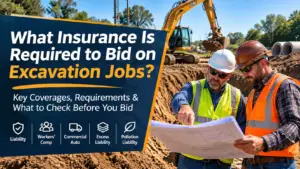
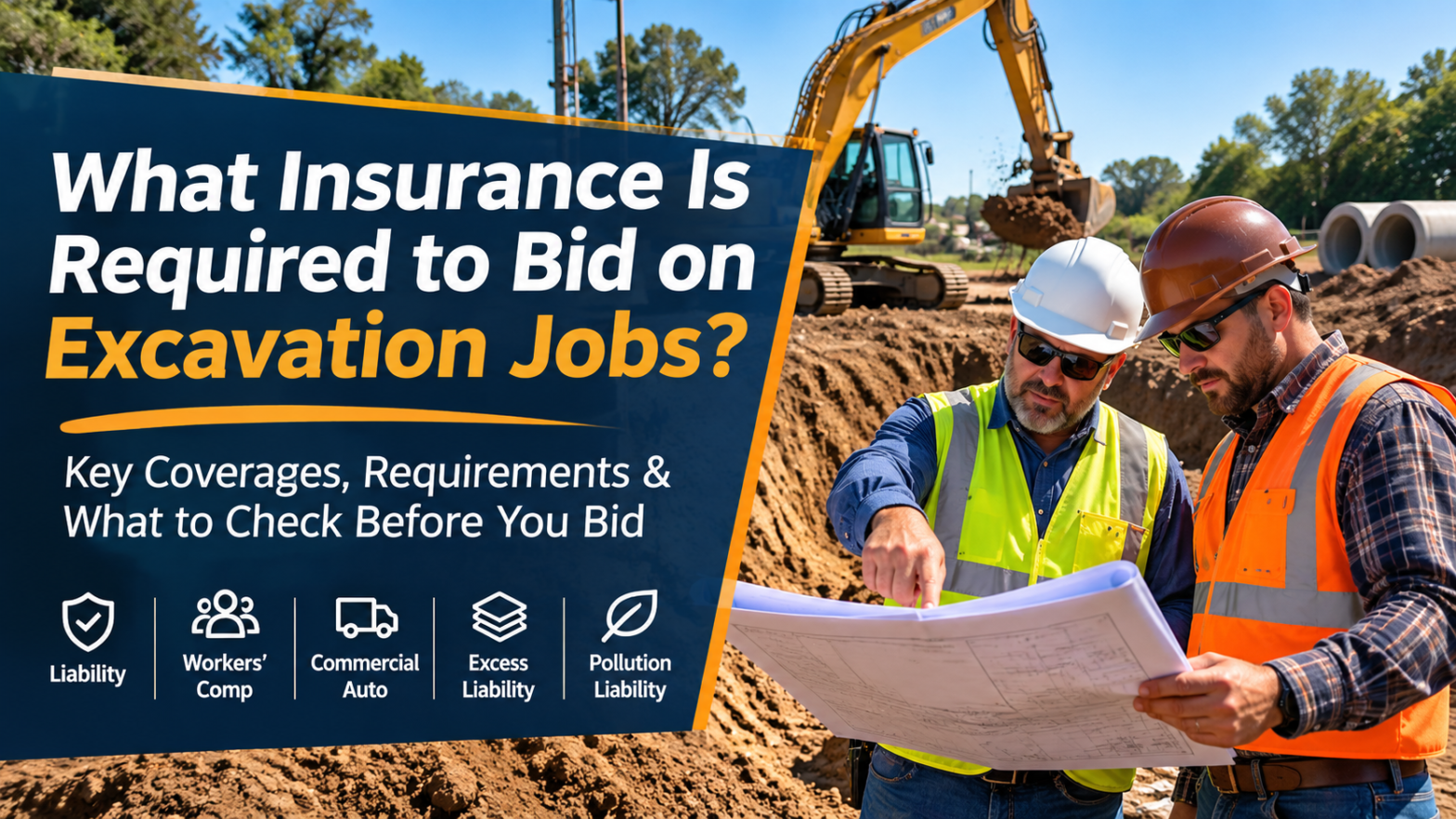
What insurance is required to bid on excavation jobs?
Quick answer: Excavation contractors may need general liability, workers’ compensation, commercial auto, and excess liability insurance for construction projects. Some jobs also require pollution liability, equipment coverage, specific endorsements, or bonds. Exact requirements depend on the bid documents, contract, project location, scope of work, and whether subcontractors are involved.
There are three different kinds of requirements to sort out:
- Legal requirements: Obligations imposed by applicable law, such as certain workers’ compensation or vehicle insurance requirements.
- Contract requirements: Coverage types, limits, endorsements, and documentation required by the project owner or general contractor.
- Operational protection: Coverage appropriate for the contractor’s actual vehicles, equipment, employees, and excavation exposures—even when the bid documents do not expressly request it.
Also, the evidence required with the bid may differ from what must be in place before mobilization. Read both deadlines carefully.
Insurance coverages excavation contractors should review
There is no single excavation insurance package that fits every job. A residential grading project, a commercial utility trench, and a large site-development contract can have very different requirements. Start with the following coverage categories and compare each one against the actual project specifications.
General liability insurance
Commercial general liability may respond to covered third-party bodily injury and property damage arising from your operations. For example, a neighboring property owner may claim that excavation activity damaged a fence, retaining wall, or other property. Whether the claim is covered depends on the circumstances and policy wording.
- Confirm the required per-occurrence and aggregate limits.
- Review the declared operations and any restrictions involving excavation, grading, underground work, or subcontractors.
- Check additional insured, completed operations, and other contract-related endorsements.
- Do not assume a certificate establishes that every required condition has been satisfied.
Our contractor general liability insurance guide explains common protections, exclusions, and job-related requirements in more detail.
Workers’ compensation and employers liability
Excavation exposes crews to moving equipment, trench hazards, uneven ground, and other serious workplace risks. Workers’ compensation generally addresses covered work-related employee injuries under applicable law; employers liability is a related coverage often specified in construction contracts.
Rules differ by state, business structure, and employment circumstances. A general contractor may also require proof of coverage from subcontractors. Missing or inadequate subcontractor documentation can create disputes, audit problems, and potentially additional exposure. Review workers’ compensation insurance alongside the project’s labor arrangements.
Commercial auto insurance
Excavation businesses frequently use trucks and other vehicles to move crews, materials, and equipment between locations. Commercial auto coverage addresses covered vehicle-related liability; the contract may specify a required limit and may also address hired or non-owned autos.
Vehicle liability is not the same thing as physical damage protection for an excavator or coverage for tools in transit. See commercial auto insurance and verify which vehicles and uses are contemplated by your policy.
Excess liability insurance
Larger jobs sometimes require liability limits above those provided by the primary general liability or auto policies. Excess coverage may help meet higher required limits, but its terms, underlying insurance requirements, and exclusions must be reviewed. It is not safe to assume that an excess policy automatically fills every gap in an underlying policy.
Learn more about excess liability insurance for contractors.
Contractors pollution liability
Excavation can uncover contaminated soil, disturb pollutants, or lead to allegations involving environmental damage. A general liability policy may contain pollution exclusions or restrictions, and a contract may specifically require pollution liability. The right approach depends on the site history, scope, and policy terms.
If the work involves potentially contaminated areas or unusual environmental conditions, review environmental and pollution-related insurance before finalizing the bid.
Tools and equipment coverage
Excavators, loaders, skid steers, trenchers, and related equipment can represent a substantial operational exposure. Tools and equipment coverage—often written as a form of inland marine insurance—may address certain covered losses involving mobile equipment. Coverage for rented equipment, transit, theft, or breakdown depends on the form.
The project may not require this coverage, but it still deserves review. See contractors tools and equipment insurance.
Builders risk, professional liability, and construction bonds
Depending on the contract, the contractor’s role, and the nature of the project, other requirements may arise. Builders risk can address specified property under construction; professional liability may matter when a contractor assumes design or professional-services responsibilities; and bid, performance, or payment bonds may be required. A bond is a separate contractual financial instrument, not a substitute for liability insurance.
Excavation insurance exclusions and coverage gaps to check
A policy can show an acceptable liability limit and still have conditions that matter for the project. These are several areas worth reviewing before making commitments to the owner or general contractor.
Underground utilities
Suppose a crew strikes a buried gas line, fiber-optic cable, or water main. The resulting claim may involve property damage, service interruption, or other allegations. Coverage depends on the policy wording, any underground-work restrictions, the circumstances, and applicable exclusions. Neither blanket coverage nor blanket exclusion should be assumed.
Excavation and earth-moving operations
Some insurance programs restrict specific activities, depths, project types, or operations. If the job includes deep trenching, utility work, shoring, or extensive grading, confirm that the insurer understands the actual scope. A generic description of ‘construction’ may not be enough to evaluate the exposure.
Subcontracted work
If another company performs part of the excavation, your general liability policy may have conditions or exclusions tied to subcontracted operations. Separate subcontractor policies and certificates are important, but they do not automatically eliminate your own responsibilities.
Pollution and damage to your own work
Pollution-related losses may need specialized review. Likewise, general liability generally is not designed to replace equipment coverage or guarantee correction of defective work. The policy language and the nature of the claim control.
What limits and endorsements might the excavation contract require?
Project specifications often go beyond a simple request for general liability. They may identify limits, the parties who must be insured, how multiple policies respond, and how long certain protection must continue.
- General liability per-occurrence and aggregate limits.
- Commercial auto liability limits.
- Workers’ compensation and employers liability provisions.
- Excess or umbrella liability limits.
- Additional insured status for specified parties.
- Primary and noncontributory wording, where required.
- Waiver of subrogation provisions, where required and available.
- Completed operations requirements and applicable duration.
- Certificates, endorsements, and other evidence by the contract deadline.
| Illustrative contract wording | What to verify |
|---|---|
| $1 million GL per occurrence | Does the policy provide the stated limit? |
| $2 million GL aggregate | Does the aggregate meet the requirement? |
| Additional insured status | Does the applicable endorsement meet the contract wording? |
| Primary and noncontributory | Does the required wording apply to the relevant coverage? |
| Excess liability limit | Are the limit, underlying coverage, and terms appropriate? |
Illustrative examples only—not universal excavation job requirements.
For a broader explanation, see construction job insurance requirements for contractors.
Can you bid before all the insurance is in place?
Sometimes the bid package asks for evidence of coverage at submission. Other projects require proof after award but before the contractor can start work. Some impose requirements at multiple stages. There is no reliable one-size-fits-all answer.
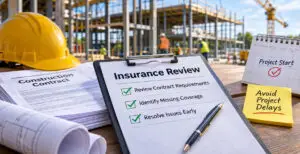
Read the bid instructions and insurance exhibit together. Identify what must be submitted with the proposal, what must be effective before mobilization, and whether a required endorsement or additional limit can actually be arranged. If the documents are unclear, request clarification before committing.
Do not assume a certificate can be issued with wording that the policy does not support. Our contractor certificate of insurance help page explains why certificates and underlying coverage must be reviewed together.
How insurance requirements can affect the profit you expect from a job
A contractor can prepare a solid excavation estimate and still overlook an insurance obligation that changes the economics of the project. A higher excess limit, specialized pollution protection, an endorsement request, or an unfamiliar subcontractor requirement may require additional review or adjustments to the insurance program.
That does not mean every requirement will be difficult to satisfy. It means the contractor should understand it early enough to make an informed decision. The same principle applies to a small site-preparation contract and a larger commercial excavation bid: know what you are agreeing to before the deadline.
Using subcontractors? Follow three risk-management pillars
Excavation contractors and general contractors sometimes bring in trucking companies, specialty utility crews, grading contractors, or other subcontractors. If you are responsible for their work under the contract, managing their insurance is more than collecting a W-9.
1. Verification
Collect the required certificates and review general liability, workers’ compensation, commercial auto, and excess coverage as applicable. Check limits, effective dates, renewal dates, and whether the insurance is appropriate for the subcontractor’s operations.
2. Documentation
Maintain signed subcontractor agreements, certificates, endorsements, and renewal records in an organized file for each subcontractor. Rich refers to these organized records as “T files.” They help document what was requested, received, and reviewed.
3. Risk transfer
Review the agreement’s responsibilities, indemnification provisions, additional insured requirements, required limits, and the division between your operations and the subcontractor’s work. Contract wording and insurance provisions should be reviewed by the appropriate professionals.
See our subcontractor insurance and risk management guide and the practical article on subcontractor certificates of insurance.
What to send for an excavation insurance requirements review
You do not need to interpret the entire insurance exhibit yourself. Send the documents that describe the job and your current coverage so the requirements can be compared against what is actually in place.
- The bid invitation and insurance specifications or contract exhibit.
- A brief description of the excavation, trenching, grading, or utility work.
- Project location, expected schedule, and any bid or mobilization deadlines.
- Current policy declarations and available endorsements.
- Required certificate wording or a rejected certificate request, if applicable.
- Whether you will use subcontractors, and what work they will perform.
- Any unusual limits, pollution requirements, or coverage questions.
Send me your job requirements—I’ll review them with you.
We can look at the scope, required limits, endorsements, and your existing coverage before you make a commitment. Call or text me anytime.
Rich Tygett · I.C. Insurance Solutions
Excavation insurance requirements in California and Texas
I.C. Insurance Solutions works with contractors navigating job requirements in California and Texas. The practical review process is similar in either state: identify the legal requirements that apply to the business, read the project-specific insurance exhibit, and check whether the current program meets the actual scope of work.
However, state workers’ compensation rules, contractor classifications, and other obligations can differ. A Texas project owner may impose contractual insurance conditions even where a particular state-law requirement differs from California’s. The bid and policy should be evaluated for the specific project rather than relying on a blanket state-by-state rule.
Frequently asked questions about excavation insurance
Is general liability insurance required to bid on excavation jobs?
Many excavation bids specify general liability insurance, but there is no universal requirement for every project. Check the bid documents, applicable law, and contract for the coverage and limits that apply.
Does general liability cover damage to underground utilities?
It may respond to some covered utility-damage claims, but coverage depends on the circumstances, policy language, exclusions, and endorsements. Underground-work restrictions should be reviewed before bidding.
Do excavation contractors need pollution liability insurance?
Not every excavation project requires a separate pollution policy. It may be relevant when a site involves contaminated materials, potential pollution events, or a contract specifically calls for the coverage.
Can I use subcontractors without collecting certificates of insurance?
Failing to collect and review required subcontractor insurance documents can create contractual, audit, and liability problems. Verification should be paired with agreements, endorsements, and organized records.
What if my insurance limits are lower than the project requires?
Review the contract and your current coverage before committing. Your broker can help determine whether additional limits or other changes are available and whether the requirements need clarification.
Does a certificate of insurance prove I meet every excavation requirement?
No. A certificate generally summarizes reported insurance information. It does not amend a policy, create coverage, or substitute for endorsements required by the contract.
Review the requirements before you submit the excavation bid
Excavation jobs can involve underground utilities, equipment, employees, subcontractors, and contract terms that deserve a careful look. The right insurance review starts with the work you will perform and the documents you have been asked to sign—not a generic list of coverages.
If a requirement looks unfamiliar, send it over before you finalize the bid. Send me your job requirements—I’ll review them with you. Call or text me anytime.
Insurance information is general educational guidance, not a determination of coverage or legal advice. Actual coverage depends on the issued policies, endorsements, exclusions, facts, and applicable law. Project specifications should be reviewed individually.