Building a successful contracting business takes time. It takes hard work, careful planning, and years of keeping your word. Every job you finish helps build your reputation. Every satisfied client gives you another chance to earn trust and grow your business.
When you first started, you may have handled most of the work yourself. You might have owned one truck, a few tools, and enough equipment to get the job done. Today, your business may look very different.
You might have several crews, more trucks, and larger projects. You may work with more subcontractors or take on jobs with insurance requirements you have never seen before. Growth is a good thing, but it also brings new risks.
The insurance that worked when you started may no longer meet your needs. A new job might require higher coverage limits. More workers, vehicles, and equipment can also mean more to protect.
That’s why managing risk should be part of your business plan. It shouldn’t be something you think about only when a policy renews or a client asks for proof of insurance.
At Integrated Commercial Insurance Solutions, Inc., we believe contractors deserve an advisor who takes the time to understand their business. Good planning, regular insurance reviews, and trusted relationships can help you protect what you’ve built while preparing for the future.
Every contractor knows that planning matters.
Before starting a job, you review the plans, estimate materials, schedule workers, and talk with subcontractors. You think about how long the work will take and what might cause delays. You also want to know whether the job will earn the profit you expect.
Insurance should be part of that planning process. Many contractors already carry general liability insurance and other business policies. They may assume those policies will meet the needs of every new project. But different jobs can have different insurance requirements.
A small home remodeling project may have simple requirements. A large commercial job may require higher liability limits, extra coverage, or special policy endorsements. Learning about these requirements too late can create problems.
Imagine a contractor who has spent years remodeling homes. The business has a good reputation, and the owner wants to start working on larger commercial projects.
One day, the contractor gets a chance to bid on a large office renovation. The owner reviews the plans and works out the cost of labor, materials, and subcontractors. The numbers look good, so the contractor submits the bid. A few weeks later, the contractor wins the job.
Then comes a surprise. The contract requires an extra $3 million in excess liability coverage. The contractor’s current insurance does not meet that requirement.
Now the owner must find out whether the coverage is available and what it will cost. That added expense was not included in the bid, so it could reduce the profit the contractor expected to earn.
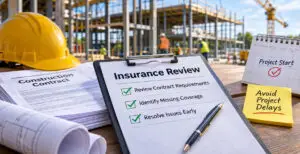
There was a better way to handle this. Before submitting the bid, the contractor could have shared the insurance requirements with an advisor. The advisor could have reviewed the existing policies, explained what was missing, and helped the contractor understand the options.
With that information, the contractor could have planned for the added expense before making a commitment. This is why reviewing construction job insurance requirements before bidding is a good business habit. A little planning can help prevent an unwanted surprise.
Planning isn’t just about the next job. It’s also about where you want your business to go. Maybe you want to hire another crew. Perhaps you hope to work on larger buildings or expand into a new area. You may also want to offer services that you haven’t provided before.
These changes can affect your insurance needs. For example, a contractor who starts offering design services may face risks that weren’t part of the business before. A contractor who begins using more subcontractors may need better ways to check their insurance and keep records.
Talking about these plans with your advisor can help you prepare. You don’t need to predict every problem that might happen. You just need to understand the risks that come with the work you plan to do.
Think about your business one year ago. Did you have the same number of workers? Were you doing the same types of jobs? Did you own the same trucks and equipment?
For many contractors, a lot can change in one year. You might hire another worker because business is picking up. You may add a truck so a second crew can reach job sites. You might start taking on larger jobs or working with more subcontractors.
Each change may seem small at the time. But after a few years, your business may be much larger than it was when you first arranged your insurance. Your coverage needs to keep up with those changes.
When your insurance comes up for renewal, it may be tempting to sign the paperwork and move on. You have jobs to manage, workers to schedule, and clients waiting for answers. Insurance may not seem like something that needs much attention.
But renewing a policy doesn’t always mean it still fits your business. Imagine a contractor who started with three workers, one truck, and a small set of tools. Five years later, the company has twelve workers, four trucks, and several crews working on different projects. The owner has also started using more subcontractors.
The business has grown, but the insurance hasn’t had a full review. Some policies may no longer match the work being done or the property the company owns.
An annual review gives the contractor and advisor time to look at these changes. They can discuss current jobs, workers, equipment, and future plans. Then they can review the policies and decide whether any changes are needed.
A good insurance review should do more than check coverage limits. It should also help you understand what your policies cover and what they may leave out.
General liability insurance is a good example. Many contractors know that general liability can help with certain claims when someone gets hurt or another person’s property is damaged. But it doesn’t cover every problem that can happen on a job.
Some policies may limit coverage for certain types of work. Others may have rules about subcontractors, pollution, or damage to the work being done. Even a policy with a high coverage limit may not cover a claim if that type of loss is excluded.
That’s why reviewing general liability insurance for contractors with an experienced advisor can be helpful. Your advisor can explain the policy in plain language and help you understand how it applies to your work.
Other policies may need attention, too. Workers’ compensation may help with covered employee injuries. Commercial auto insurance addresses certain risks involving business vehicles. Inland marine insurance may help protect covered tools and equipment at job sites or while they’re being moved.
The coverage you need depends on the work you do and the risks your company faces.
An annual review is a good starting point, but you shouldn’t wait for renewal if something major changes. If you’re taking on a new type of work, hiring several employees, or signing a large contract, contact your advisor.
A short conversation before making a decision may help you avoid a bigger problem later. The more your advisor knows about your business, the better they can help you review your insurance needs.
Insurance can be confusing. Policies contain rules, conditions, and exclusions that aren’t always easy to understand. Even contractors who have been in business for many years may have questions about their coverage.
That’s why working with an experienced insurance advisor can make a difference. You need someone who can explain your options and help you understand how your policies relate to your work.
But a good relationship goes beyond answering insurance questions. Your advisor should also know your business.
Two contractors may work in the same trade but face different risks. One may handle small home repairs. Another may manage large projects with several crews and subcontractors. One may own expensive equipment. Another may rent most of what is needed for each job.
Their insurance needs may be different. An experienced advisor takes the time to learn how each business works. That means asking about the jobs you take, the people who work for you, and the contracts you sign. It also means looking closely at your policies.
For example, a general contractor may believe that all work done by subcontractors is covered under the company’s general liability policy. But some policies have rules or exclusions that affect subcontracted work.
An advisor who understands contractor insurance can help explain those rules and discuss what steps may be needed. The goal isn’t to make insurance harder to understand. It’s to help you make informed decisions.
Think about the people you’ve worked with for years. You may have suppliers who know what materials you prefer. You may have subcontractors you trust because they’ve done good work for you many times.
Those relationships make your work easier. You know what to expect, and you don’t have to explain everything each time you call. The same is true of your insurance advisor.
Over time, your advisor learns about your company. They know what kind of work you do, how many workers you have, and how you use subcontractors. They also learn about your plans for the future.
Imagine you’ve worked with the same advisor for several years. You decide that you want to start bidding on larger commercial projects. Instead of explaining your entire business again, you can focus on what’s changing.
Your advisor already knows your current coverage and can help you review the new job requirements. That kind of relationship becomes more valuable as your business grows.
At Integrated Commercial Insurance Solutions, we believe contractors deserve personal service. You’ve spent years learning your trade, building your company, and earning the trust of your clients. Your business is more than a policy number.
A good advisor should take the time to listen. What kind of work do you enjoy? What problems are you facing? Where do you want your company to be in five years? These questions help your advisor understand what matters to you.
Good service also means being available when you need help. A client may ask for an insurance document while you’re on a job site. You may receive a contract with requirements you don’t understand. When that happens, it helps to have someone you can call or text.
Rich Tygett of Integrated Commercial Insurance Solutions believes in taking care of contractors and building lasting relationships. That means listening, explaining insurance in simple terms, and being there when questions come up.
A strong relationship is built over time through trust and dependable service.
Growing a contracting business can be exciting. You may start getting calls from larger clients. You may have enough work to hire another crew. You might begin managing several projects at once.
These are signs that your hard work is paying off. But growth also brings more people, more equipment, and more responsibilities. The insurance that worked when you had one small crew may no longer meet your needs when you’re running a larger company.
Imagine a contractor who starts by doing small home remodeling jobs. After several years, the company begins taking on larger renovations. The owner hires more workers and adds more trucks and equipment.
Soon, the business is working on commercial projects and using several subcontractors. There are now more job sites to manage and more contracts to review. If something goes wrong, the financial loss could also be greater.
This doesn’t mean every growing contractor needs every type of insurance. It means the owner should review the coverage as the business changes.
General liability, workers’ compensation, commercial auto, and tools and equipment coverage may all play a part. Larger jobs may also require excess liability coverage. Some types of work may call for professional liability or pollution liability insurance.
Your advisor can help explain which coverages may fit your work.
Many general contractors depend on subcontractors. They help complete work that calls for special skills. They also allow contractors to manage larger projects. But working with subcontractors brings risks that need attention.
Imagine you have several subcontractors working on three different jobs. Each company has its own insurance policies. One subcontractor’s general liability policy may renew in March. Its workers’ compensation policy may renew in September.
If you don’t track those dates, coverage could expire without your knowledge. That can become a serious problem if an accident happens or a client asks for proof of insurance.
A good subcontractor risk-management plan has three main parts.
Verification means checking that subcontractors have the insurance required for their work. It also means tracking renewal dates.
Documentation means keeping signed agreements, certificates of insurance, and required endorsements in an organized file for each subcontractor.
Risk transfer means using written agreements to explain who is responsible for different parts of the work. These agreements may include insurance requirements and additional insured provisions. They should be reviewed under applicable laws.
A W-9 alone doesn’t prove that a subcontractor has the right insurance. Learning more about subcontractor insurance and risk management can help general contractors build better habits.
When you first start a business, you may be able to keep track of most things yourself. You know which subcontractors are on each job. You know where your tools are, and you handle most client calls.
But as the business grows, it becomes harder to manage everything from memory. You need better ways to track insurance documents, equipment, and contracts.
These systems don’t have to be hard to use. Keeping a separate file for each subcontractor can make it easier to find certificates and agreements. Setting reminders for insurance renewal dates can help you keep records current.
Your advisor can also help you understand which insurance records need attention. Small changes like these can make a growing business easier to manage.
Risk management shouldn’t feel like another large job added to your schedule. Many useful habits are simple.
Before you bid on a project, review the insurance requirements. When you hire workers or add equipment, tell your advisor. When you bring in subcontractors, collect the right documents and keep them organized.
If you don’t understand a policy rule or exclusion, ask about it. These steps can help you find problems early.
A contractor who reviews insurance requirements before bidding is less likely to face unexpected coverage needs after accepting a job. A business that tracks subcontractor insurance dates is more likely to notice when a policy needs to be renewed.
An owner who talks with an advisor throughout the year has more chances to discuss changes before they cause problems. Of course, insurance is only one part of managing risk.
Safe work habits, clear contracts, good records, and careful planning also matter. When these practices become part of your daily work, they can help support your business for years to come.
Your contracting business is more than the jobs you complete. It represents years of hard work, the trust of your clients, and the people who depend on your company. For many contractors, it’s also part of their family’s future.
You can’t prevent every accident or predict every problem that may come your way. But you can prepare.
Planning ahead helps you understand new jobs before making commitments. Annual insurance reviews help you see whether your coverage still fits your business. Working with an experienced advisor gives you someone to turn to when questions come up.
Together, these habits can help you protect what you’ve built and prepare for the years ahead.
At Integrated Commercial Insurance Solutions, Inc., we work with contractors to learn about their businesses, review their insurance needs, and help them plan for growth.
If you’re reviewing your current coverage, preparing for a new project, or thinking about expanding your business, we’d be glad to talk with you.
Visit our website to request a quote or call us at 800-922-9721.
Have insurance requirements for an upcoming job? Send them to us. We’ll review them with you.
You’ve worked hard to build your business. Let’s talk about protecting it for the years ahead.
As your contracting business grows, you may take on larger jobs, hire more workers, or use more subcontractors. These changes can bring new risks. Good risk management helps you understand those risks, review your insurance needs, and make better decisions as your business grows.
Contractors should review their insurance at least once a year. You should also contact your insurance advisor when your business makes a major change, such as hiring more workers, adding equipment, entering a new type of work, or taking on a larger project. Your coverage should reflect the work your business is doing today.
Some construction projects require higher liability limits, special endorsements, or extra insurance coverage. Reviewing these requirements before bidding helps you understand whether your current policies meet the job’s needs. It also gives you time to plan for any added insurance expenses before accepting the work.
No. General liability insurance can help with certain claims involving injuries to other people or damage to their property, but it does not cover every loss. Some policies may exclude or limit coverage for certain types of work, pollution, or subcontractor operations. An experienced advisor can help you understand the limits and exclusions in your policy.
General contractors should keep signed subcontractor agreements, certificates of insurance, and required endorsements in organized files. They should also track policy renewal dates and confirm that subcontractors maintain the coverage required for their work. A certificate provides information about insurance but does not create coverage or change the policy’s terms.
An experienced advisor can learn about your business, review your current insurance, and help you understand the coverage needs that may come with growth. As you hire workers, acquire equipment, or pursue larger projects, your advisor can explain how those changes may affect your insurance. A long-term relationship also makes it easier to get help when new questions arise.
This article is a collaboration between IC Insurance Solutions, Inc and OpenAI’s ChatGPT. Created on Nov 19, 2026, it combines AI-generated draft material with IC Insurance’s expert revision and oversight, ensuring accuracy and relevance while addressing any AI limitations.
This guidance explains how construction companies can identify hazards, involve workers in safety planning, and build safer work practices. It complements the article’s focus on making risk management part of everyday business operations.
https://www.osha.gov/safety-management
This regulatory reference explains bonding and insurance requirements in federal contracting, including how these obligations are addressed in government contracts. It provides useful detail for contractors evaluating larger projects and formal contract requirements.
https://www.acquisition.gov/far/part-28
This resource addresses coordination among employers sharing a construction site, including communication about hazards and responsibilities. It adds a jobsite safety perspective to the article’s discussion of subcontractor risk management.
https://www.osha.gov/safety-management/communication-coordination