If you work in construction, you have probably seen the phrase “additional insured” in a contract, certificate request, or job insurance requirement.
It is one of the most common requests contractors see, but it is also one of the most misunderstood. The wording can affect your certificate, your contract, your risk, and whether the job requirements actually line up with your current coverage.
This guide explains what additional insured means in plain English for contractors in Texas and California.
Send Me Your Requirements—I’ll Review Them
Call or Text Rich
Key Takeaways
- Additional insured is one of the most common construction insurance requirements.
- It usually allows another party certain protection under your policy for liability tied to your work.
- Additional insured is not the same as being a certificate holder.
- Most additional insured requests are tied to general liability coverage.
- California contracts often include more detailed wording than Texas projects, but both should be reviewed carefully.
- Before you agree to the wording, send me your requirements—I’ll review them.
What Is Additional Insured Coverage?
Additional insured coverage means another party—usually a project owner, general contractor, landlord, developer, or other contracting party—is added to your insurance coverage for certain liability connected to your work.
In construction, this request commonly shows up in the insurance requirements before a job starts. The other party wants confirmation that your coverage may respond if they are brought into a claim because of your work or operations.
This does not mean they “own” your policy. It does not mean every claim is automatically covered. It simply means the wording in the policy or endorsement may extend certain protections to them under specific conditions.
Why Owners and General Contractors Request It
Owners and general contractors request additional insured wording because they want protection tied to the work being performed. In plain language, they do not want to be left exposed if a claim comes from the contractor’s operations.
You will often see this on:
- Commercial construction projects
- Public or municipal work
- Private development projects
- Subcontractor agreements
- Jobs where the client requires specific certificate wording
Additional Insured vs. Certificate Holder
Contractors often confuse “certificate holder” and “additional insured.” They are not the same thing.
Certificate Holder
A certificate holder receives proof that insurance exists. Being listed as the certificate holder does not automatically create coverage protection for that party.
Additional Insured
An additional insured may receive certain protection under the contractor’s coverage when the proper endorsement applies. This is why the exact wording matters.
What Contractors Should Understand Before Agreeing
Additional insured wording can affect how the job is documented, how the certificate is prepared, and whether the requirements match your current coverage setup.
Some jobs may ask for:
- Specific additional insured endorsement forms
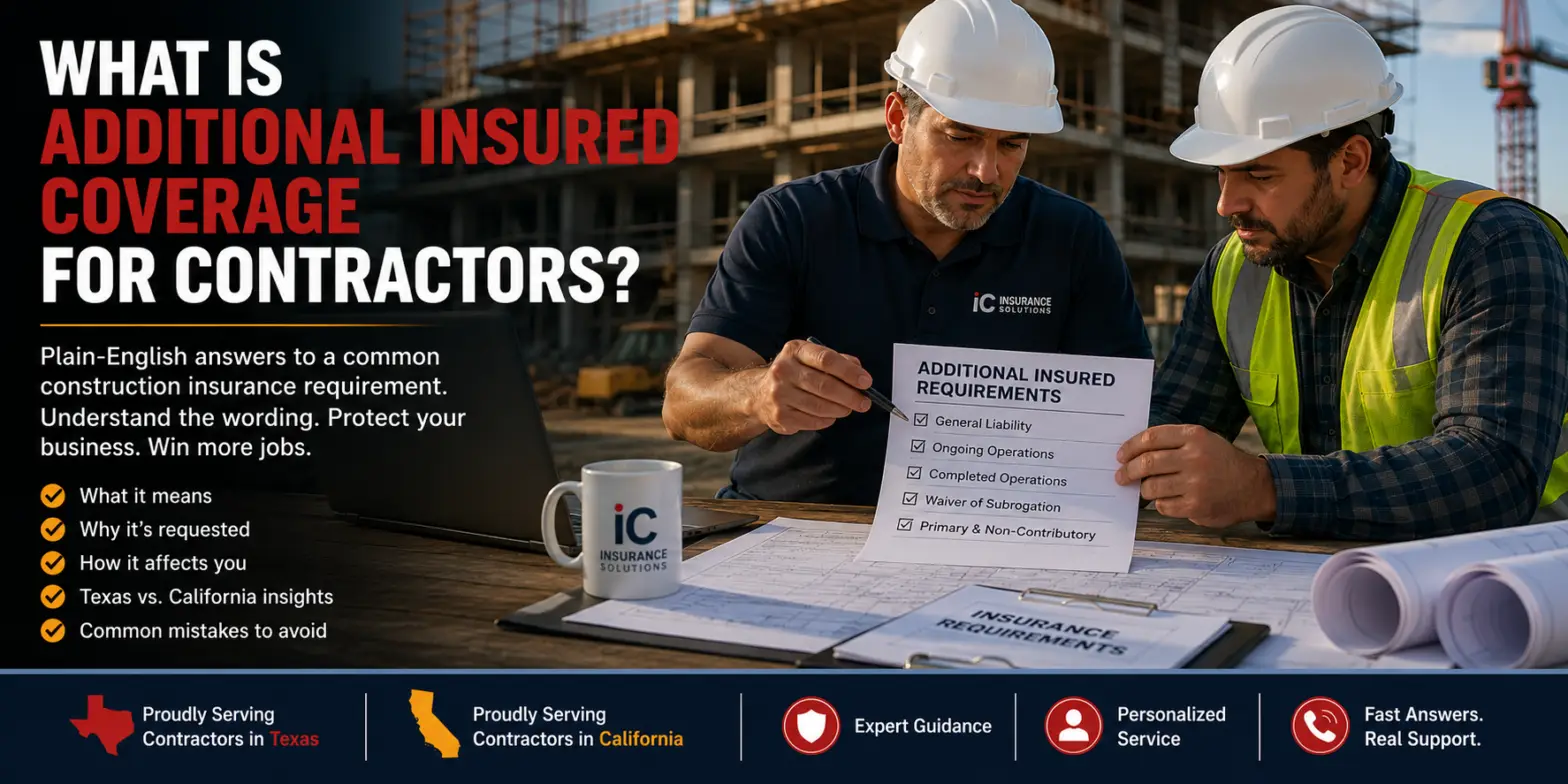
- Ongoing operations wording
- Completed operations wording
- Primary and non-contributory wording
- Waiver of subrogation wording alongside additional insured status
Additional Insured Mistakes Contractors Often Make
- Assuming every policy automatically includes additional insured wording
- Treating certificate requests like simple paperwork
- Not reviewing the endorsement wording
- Missing completed operations requirements
- Agreeing to wording they do not fully understand
- Waiting until after winning the job to review the requirements
If the requirements are already in front of you, review the full guide here: Contractor Certificate Insurance Help.
Texas vs. California Additional Insured Requirements
Texas Projects
Texas construction requirements can vary widely. Some jobs are straightforward, while larger commercial projects in Dallas, Houston, Austin, the Permian Basin, and other active markets may request broader wording and more documentation.
California Projects
California projects often use more formal contract language and may ask for detailed additional insured wording, completed operations wording, waiver of subrogation, and primary and non-contributory language. Northern California contractors should review the language carefully before bidding or starting work.
Why Additional Insured Requirements Matter Financially
Additional insured wording may seem like a paperwork detail, but it can affect job administration, underwriting, project setup, and whether your coverage lines up with the contract.
This is why reviewing requirements before bidding matters. You want to know what the job is really asking for before you submit your number and commit your crew.
Real Scenario: What This Looks Like on a Job
A contractor receives a job packet and sees a request for additional insured status. At first, it looks simple. Then the requirements also ask for completed operations, waiver of subrogation, and primary and non-contributory wording.
Now the certificate request is not just a formality. It needs to be checked against the policy setup. That review should happen before the contractor bids the job, not after the job is awarded and the start date is already moving.
Additional Insured Checklist Before You Bid
- Review the contract insurance section.
- Identify who is asking to be added as additional insured.
- Check whether ongoing operations wording is required.
- Check whether completed operations wording is required.
- Look for waiver of subrogation and primary/non-contributory requirements.
- Compare the requirement to your current coverage setup.
- Ask questions before submitting the bid.
Helpful Related Resources
Frequently Asked Questions
What does additional insured mean for contractors?
It means another party may receive certain protection under your insurance coverage for liability connected to your work, depending on the policy and endorsement wording.
Is additional insured the same as certificate holder?
No. A certificate holder receives proof of insurance. An additional insured may receive certain protections under the policy when the correct endorsement applies.
Why do general contractors request additional insured?
General contractors request it because they want protection tied to the work being performed by the contractor or subcontractor on the project.
What is completed operations additional insured?
Completed operations wording may extend certain additional insured protections after the contractor’s work is completed, depending on the policy and endorsement terms.
Should contractors review additional insured wording before bidding?
Yes. Reviewing requirements before bidding helps contractors understand job obligations, avoid surprises, and protect profitability.