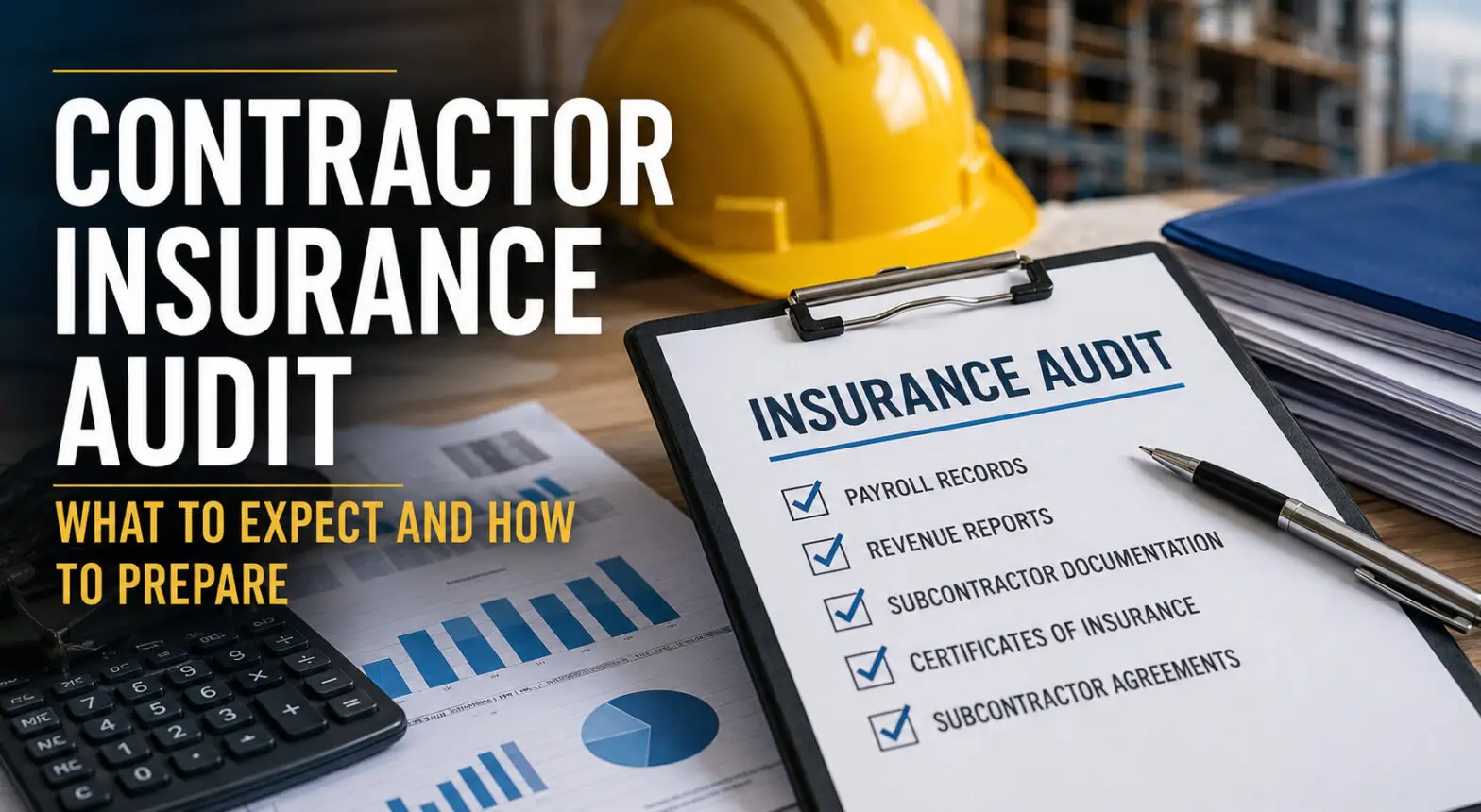
Most contractors do not think much about insurance audits until they receive a notice.
Then the questions start.
Why is my insurance company auditing me?
Did I do something wrong?
Is this going to cost me money?
The good news is that an insurance audit is normal for many contractors. It does not always mean there is a problem. Many contractor insurance policies start with estimated numbers. At the end of the policy year, the insurance company checks those estimates against what actually happened.
That is what the audit is for.
Still, audits can create problems when records are missing or disorganized. This is especially true when subcontractors are involved.
A missing certificate of insurance, an expired workers’ compensation policy, or a subcontractor agreement that was never signed may seem like a small paperwork issue during the year. But during an audit, those missing records can lead to extra insurance costs.
This article explains why contractor insurance audits happen, what auditors review, the mistakes contractors often make, and how missing subcontractor documents can affect future costs.
When a contractor buys insurance, the insurance company has to begin with estimates.
It may ask:
Those numbers help set the premium at the start of the policy.
The reality is that construction businesses can change quickly.
You may start the year with three employees and finish with seven. You may plan on smaller residential jobs but end up landing a larger project. You may use more subcontractors than expected because your schedule gets full.
When those numbers change, your insurance cost may change too.
For example, say a contractor estimates $500,000 in payroll at the start of the year. By the end of the year, actual payroll is $750,000. The insurance company now sees more labor than expected. That can lead to an audit charge.
The same can happen with revenue or subcontractor costs.
The audit compares estimated numbers to actual numbers.
Sometimes nothing changes. Sometimes the contractor gets money back. Sometimes the contractor owes more.
Most audits are not about catching contractors doing something wrong. They are about checking whether the original estimates matched the work that was actually performed.
Workers’ compensation and general liability are the policies contractors see audited most often.
A workers’ compensation audit focuses on payroll. The insurance company wants to know how much employees were paid and what kind of work they performed.
The type of work matters. Office employees and field workers do not face the same risks. A roofing crew and an office administrator are not exposed to the same hazards.
A general liability audit often focuses on revenue, operations, and subcontractor costs.
The auditor may review:
If your company grew during the year, added employees, or used more subcontractors, the insurance company wants those changes reflected accurately.
If you want to better understand how liability coverage works for contractors, reviewing your General Contractor Insurance program can help identify possible coverage gaps before they become costly problems.
Most contractor audits begin with a request for information.
An auditor or insurance company representative contacts the contractor and explains which records need to be reviewed.
The request may include:
After the records are submitted, the auditor compares them to the information used when the policy was first issued.
For contractors who keep organized records throughout the year, this process is usually straightforward.
For contractors who wait until the audit notice arrives, it can be much harder.
A full year of paperwork suddenly needs to be found. Files need to be organized. Missing certificates need to be tracked down. Questions that could have been handled months ago now need immediate attention.
This is why many contractors dislike audits. The stress often comes from gathering records under a deadline, not from the audit itself.
Most audit problems begin long before the audit notice arrives.
They usually start with small administrative tasks that get pushed aside while contractors focus on jobs, crews, schedules, and customers.
One common issue is incomplete recordkeeping.
Most contractors are not sitting in an office all day organizing paperwork. They are managing projects, solving jobsite issues, ordering materials, meeting inspectors, and keeping work moving.
Documentation often becomes a lower priority.
But audits depend on documentation.
If payroll records are incomplete or subcontractor files are missing, it becomes harder to prove exactly how work was performed during the year.
Another common issue is employee classification.
Workers sometimes perform different types of work during the year. If those duties are not documented properly, the audit may result in adjustments.
A third issue is waiting too long.
Many contractors assume they will gather everything when they need it. Then the audit notice arrives, and they are suddenly searching for certificates from subcontractors who worked six months ago or trying to locate agreements they have not reviewed in years.
That situation can often be avoided with better recordkeeping throughout the year.
If there is one issue that creates more audit problems than almost anything else, it is missing subcontractor documentation.
Many contractors understand the need to carry insurance for their own business. Fewer understand how important it is to manage the insurance carried by their subcontractors.
The problem often starts with familiarity.
A contractor may have worked with the same roofer, plumber, electrician, or concrete crew for years. There is trust. Everyone knows each other. The work gets done.
Because of that, paperwork becomes less formal.
A certificate may have been collected years ago. An agreement may have been signed for a past project. Everyone assumes the coverage is still active.
Then the audit arrives.
The auditor asks for proof. They want certificates of insurance. They want subcontractor agreements. They want records showing the subcontractor had proper coverage while performing work.
If those records cannot be produced, problems begin.
The insurance company may treat those subcontractor costs differently than expected. That can lead to additional premium.
Many audit issues come from missing certificates, expired coverage, and unsigned agreements. Understanding proper subcontractor insurance requirements can help contractors avoid unexpected audit charges and reduce liability concerns on future projects.
Contractors who avoid most subcontractor-related audit issues usually follow three simple practices.
They verify coverage.
They keep documents organized.
They make sure responsibility stays with the subcontractor doing the work.
Before a subcontractor begins work, verify that they carry the insurance required for the job.
That may include:
A certificate from last year is not enough. Insurance policies renew, change, and sometimes lapse. Coverage should be reviewed before work starts and tracked throughout the year.
Every subcontractor should have a file.
That file should contain:
The system does not need to be complicated. It just needs to be consistent.
When an auditor asks for documentation, those records should be easy to find.
Subcontractors should remain responsible for their own work.
Without proper agreements and documentation, responsibility can become unclear when a claim occurs.
Good documentation helps show who performed the work and who should be responsible if something goes wrong.
This matters during an audit, but it matters even more when there is a claim.
Missing documents can become expensive.
Imagine a contractor pays a framing subcontractor $80,000 during the year.
The contractor believes the subcontractor had insurance. But when the audit occurs, there is no certificate available.
The auditor asks for proof. The contractor cannot find it. The subcontractor cannot provide it.
Now there is no clear evidence that coverage existed during the time the work was performed.
The insurance company may treat that subcontractor cost differently during the audit. That can lead to additional premium.
The same problem can happen with multiple subcontractors.
One missing certificate may not seem like a major issue. Several missing certificates can quickly add up.
This is why documentation matters. Audits are based on records, not assumptions.
Many contractors focus only on whether they owe additional premium after an audit.
That matters, but audits can also affect future insurance costs.
Insurance companies look for patterns.
Contractors who maintain organized records and provide accurate information tend to create fewer concerns.
Contractors with repeated documentation problems often face more questions during renewal.
Future estimates may change. Renewals may require more review. The insurance company may want more detail before offering terms for the next policy year.
Clean audits can help support smoother renewals and fewer surprises in future years.
Messy audits can create frustration long after the audit is finished.
Insurance audits are not the only place contractors run into insurance surprises.
Job requirements can create problems too.
A contractor may win a project and later discover that additional coverage is required. That extra cost may reduce the profit on the job.
Before bidding, it helps to understand exactly what the project requires.
Contractors who review insurance requirements ahead of time usually have a better understanding of their true costs.
The team at Integrated Commercial Insurance Solutions helps contractors review job requirements before they become expensive surprises.
You need to know your costs before you bid a project.
That includes insurance costs.
The best way to prepare for an audit is to stay organized throughout the year.
Keep payroll records current. Keep financial records organized. Review employee classifications from time to time.
Most importantly, maintain current subcontractor documentation.
Before a subcontractor begins work:
Create a file for every subcontractor and keep all related documents together.
The goal is simple.
When the auditor asks for information, you should already have it available.
That does not mean every audit will result in no change. If your company grew during the year, you may still owe additional premium. But there is a difference between owing more because the business grew and owing more because paperwork was missing.
One is a normal part of growth.
The other can often be prevented.
Contractor insurance audits are a normal part of doing business, but they often reveal problems that have been building throughout the year.
In many cases, the biggest issue is not payroll or revenue. It is missing documentation.
A missing certificate of insurance, an expired workers’ compensation policy, or an unsigned subcontractor agreement may not seem important while a project is underway. During an audit, those missing records can lead to additional premium charges and create questions about who is responsible when something goes wrong.
The contractors who move through audits with the fewest problems usually follow the same basic habits. They keep their records organized, collect subcontractor documentation before work begins, track renewals throughout the year, and review insurance requirements before bidding jobs.
Good recordkeeping does more than make audits easier to manage. It helps protect profit margins, supports smoother renewals, and reduces the chance of expensive surprises after the work has already been completed.
If you need help organizing subcontractor documentation, reviewing insurance requirements, or preparing for an upcoming audit, Integrated Commercial Insurance Solutions can help.
Request a free review:
https://icinssolutions.com/request-a-quote/
Or call Integrated Commercial Insurance Solutions, Inc. at 800-922-9721 to request a quote.
Send us your job requirements, and we’ll review them with you before small documentation issues turn into larger problems.
A contractor insurance audit is a review conducted by an insurance company to compare estimated payroll, revenue, and subcontractor costs against actual business activity during the policy period. The audit helps determine whether the premium charged was accurate.
Insurance companies audit contractors because many policies are issued using estimated figures. Since payroll, revenue, and subcontractor costs often change throughout the year, the audit verifies what actually occurred and adjusts premiums if necessary.
Workers’ compensation and general liability policies are the most commonly audited contractor insurance policies. Depending on the carrier and the type of work performed, other policies may also be subject to audit.
Commonly requested documents include payroll reports, tax records, profit and loss statements, general ledgers, subcontractor invoices, certificates of insurance, and subcontractor agreements.
If you cannot provide proof that your subcontractors carried the required insurance coverage, the insurance company may treat those subcontractor costs differently during the audit. This can result in additional premium charges.
Yes. If your actual payroll, revenue, or subcontractor costs are higher than the estimates used when the policy was issued, the audit may result in additional premium. Missing documentation can also contribute to higher audit costs.
Yes. If your actual payroll, revenue, or subcontractor costs are lower than estimated, the audit may result in a premium credit or refund, depending on the policy and carrier.
Subcontractors are often a major focus during audits. Insurance companies may request certificates of insurance, subcontractor agreements, and payment records to verify that subcontractors carried proper coverage and operated as independent businesses.
The best way to prepare is to keep payroll records, financial documents, and subcontractor files organized throughout the year. Collecting certificates of insurance before subcontractors begin work and tracking renewals can help prevent audit issues.
Most contractor insurance audits occur annually, typically after the policy period ends. However, the timing and frequency may vary depending on the insurance company and the type of policy.
This article is a collaboration between IC Insurance Solutions, Inc and OpenAI’s ChatGPT. Created on June 08, 2026, it combines AI-generated draft material with IC Insurance’s expert revision and oversight, ensuring accuracy and relevance while addressing any AI limitations.
This article from Fisher Phillips explores how uninsured subcontractors can affect workers’ compensation audits and lead to unexpected premium charges. It provides practical guidance on documenting subcontractor coverage and preparing for audit reviews.
Travelers provides a detailed overview of how premium audits work, including payroll verification, subcontractor documentation requirements, and the role of certificates of insurance. This resource is particularly useful for understanding what auditors typically request and how audit findings are calculated.
Published by The Beacon Mutual Insurance Company, this guide outlines the records contractors should maintain before an audit, including payroll reports, subcontractor agreements, and certificates of insurance. It offers a practical checklist for contractors looking to improve documentation and reduce audit-related issues.
URL: https://www.beaconmutual.com/assets/PremiumAudit-Tips-Contractors-Subcontractors.pdf